


 By Admin |
 November 5,
2026
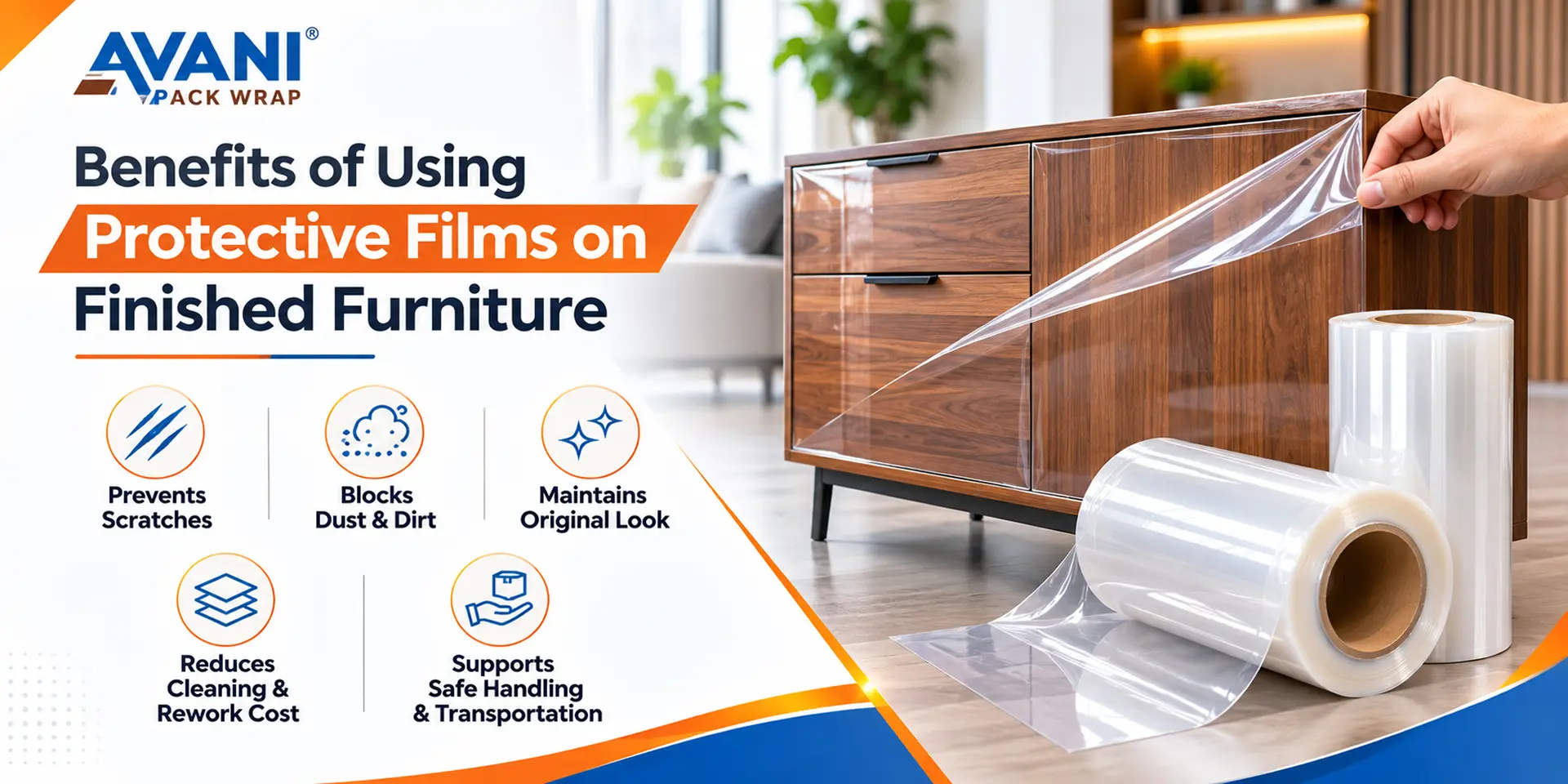
Even the most beautiful and well-designed furniture item may become unappealing long before it reaches its end user due to minor damage that may occur during any phase of handling. A little scratch during the loading process, dust collecting when stored somewhere, or contact with other things during transportation will affect the appearance. Proper handling becomes critical for manufacturers and suppliers to avoid additional cleaning, repair, and complaints from consumers.
Application of surface protection film for furniture can be a very effective solution to minimize such risks. It creates a temporary coating on the surface and protects it from dust and contact with other items while storing, packaging, and transporting the items. Avani Pack Wrap offers protective films depending on the type of surface covering and material handling needs of your business.
The manufacturers put in quite an effort in terms of making sure that the finish is done to perfection. No matter whether it is a wooden wardrobe, laminate cabinet, dining table or office desk, the finishing will add value to the product.
However, when the products are ready, there are many risks to them.
Thus, covering will help decrease these problems.
Surfaces of furniture come into contact with hard objects like tools or other materials when movement is made during transit. Scratches formed in the process can be difficult to remove, particularly from laminated or glossy surfaces. The protective film exists between the furniture and whatever comes into contact with it.
Dust spots develop very quickly on furniture after it has been kept in a storage area or workplace, since it picks up dust easily. Dust accumulates to such an extent that you have to clean it again before shipment. A coat of something is required since it prevents dust from accumulating.
Customers want their new furniture to come in excellent condition. Any minor scratches, stains, or marks can leave a negative impact even if the furniture is well constructed. Using a protective coating when handling protects the finish of the furniture. The transparent coating allows the original colour to be visible.
If you do not use any protective film, then there is a likelihood that you may require additional cleaning, polishing, or minor repairs before you receive the furniture. This is a time-consuming activity, and it will cost you more. Use of a suitable film could protect the surface from unnecessary problems. In addition, manufacturers and distributors will have more time to handle other activities.
Generally, there is a series of handling activities before the item reaches the consumer. In the process of stacking, packing, loading, and unloading, the surfaces may be in contact with other surfaces. An appropriate film selection would reduce surface contact and scratching. This will be beneficial to manufacturers, interior decorators, distributors, and retailers dealing with multiple finished products.
The selection of film does not depend only on its appearance. Various types of furniture require different adhesives and different films. Here are some of the things that need to be considered:
It is always better to do a trial on a small portion of the furniture.
Furniture that is finished requires proper handling from manufacturing to storage and transportation. Scratches, dust, stains, and scuffs may affect its appearance and increase the cost of preparing products for shipping. The use of an appropriate temporary film reduces such issues and maintains the furniture in good condition until it gets to the consumer.
Avani Pack Wrap provides solutions in terms of surface protection films for various industrial and handling applications. Proper selection of surface protection film for furniture can help to maintain product quality and minimize damage.
It is a temporary layer applied to the furniture surfaces to reduce scratching, dust and handling marks during storage and installation.
Yes, it is possible to apply it on compatible laminated furniture surfaces, provided that the proper adhesive is used.
The transparent protective film preserves the appearance, colour and finish of the furniture, but protects it at the same time.
It is necessary to choose the proper film and adhesive in order not to have any problems with the residues left after removal.
