


 By Admin |
 October 14, 2026
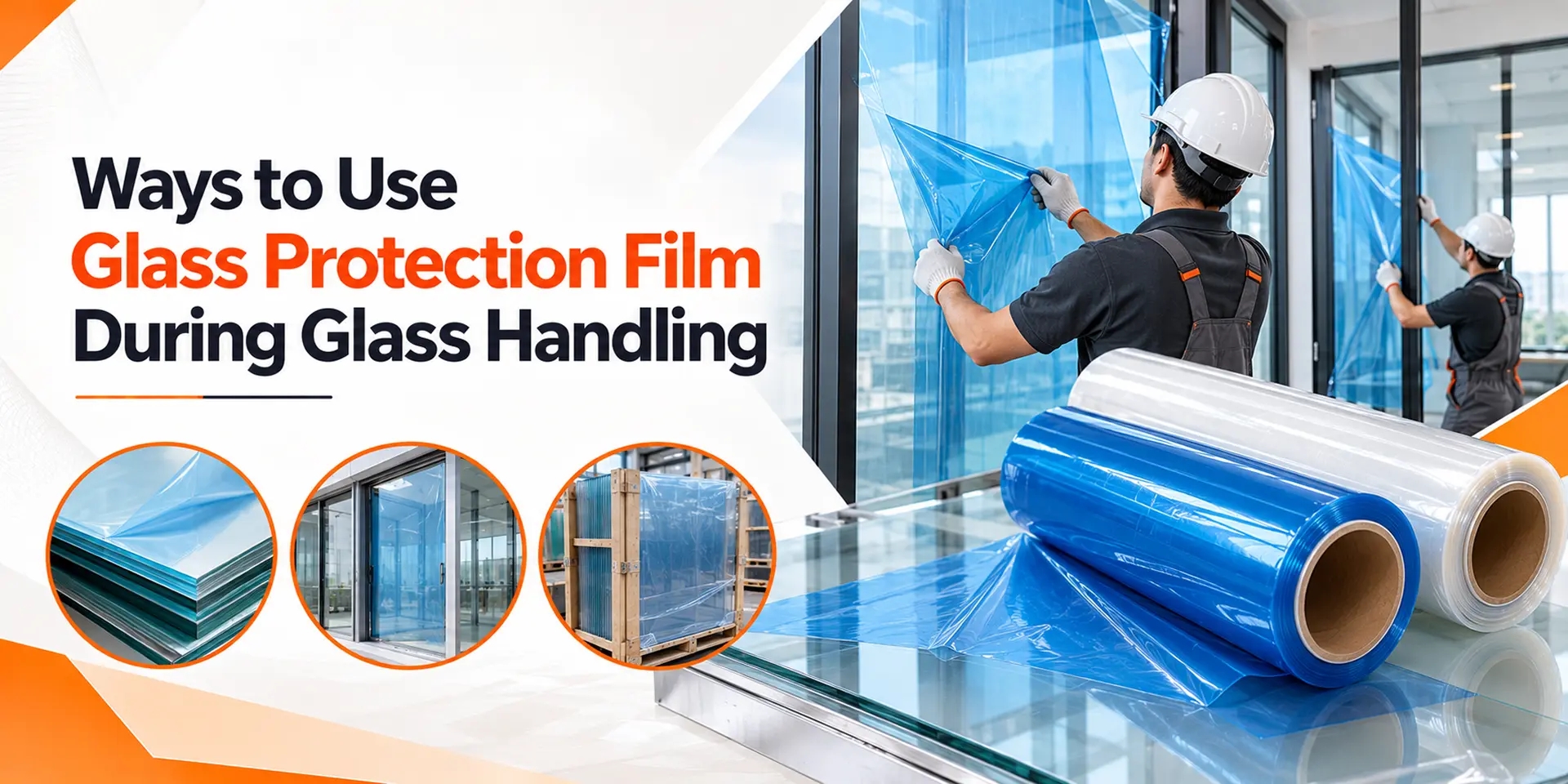
Glass is used in many items such as windows, doors, office partitions, and other fittings. While making, renovating, storing, and transporting the aforementioned materials, they may come into contact with dust, paint, plaster, and other similar materials. Stains formed on glass surfaces affect their appearance and require cleaning.
Glass Protection Film serves as a temporary covering material which could help reduce the risk of contact with dust and other surface abrasions. Avani Pack Wrap Private Limited produces window protection film for glazed panels and frames.
Glass products may go through several steps before being installed and used. Using an appropriate film coating will ensure that they remain cleaner during these processes.
Not every film suits every surface. Consider the film's adhesion, the ease of its removal, and the intended application before choosing a type of film.
Clean the surface before applying the film so that the surface is absolutely dry. This could lead to spotting when dust particles and other elements get trapped between the surface and the film.
Make sure that you lay down the film without any creases or bubbles. Completely cover the surface without interfering with any of the fittings or work going on. In case the film has a certain finish, it is wise to try it out on a small surface area first.
While using the film, check from time to time whether the film edges are lifting, tearing, or have become too dirty. Change the film when it is no longer providing enough coverage. Use the film according to the recommended period without going beyond the recommended period.
While pulling off the film, be careful that you do not pull the film out, but remove it by peeling it off. The surface should be inspected after the removal of the film and then cleaned properly.
Being clean during the process of manufacturing, renovation, storage, and transportation of glazed products helps in reducing unnecessary marks and cleaning work.
Selection of the right Glass Protection Film should consider adhesive property, the colour of the film, UV light protection, and removal of the film.
Avani Pack Wrap Private Limited provides window protection films that can be used for temporary care of the surface. It is important to do tests on specific materials before applying the product across all the units in accordance with the given instructions.
It protects from dust, dirt, and minor scratching during production, renovation, storage, and transportation.
Yes, proper film may protect from paint drops, dust and other materials during renovation. Be sure to test it for compatibility.
It comes in various colours, including transparent and blue. The choice will depend on requirements.
Remove it carefully, following the manufacturer's recommendations. Try it first on a small area, especially if the glass has a special finish.
